Spotted this at school. Looks like it is too high on the wall. Am I right? Most of the pull stations are at this height too.
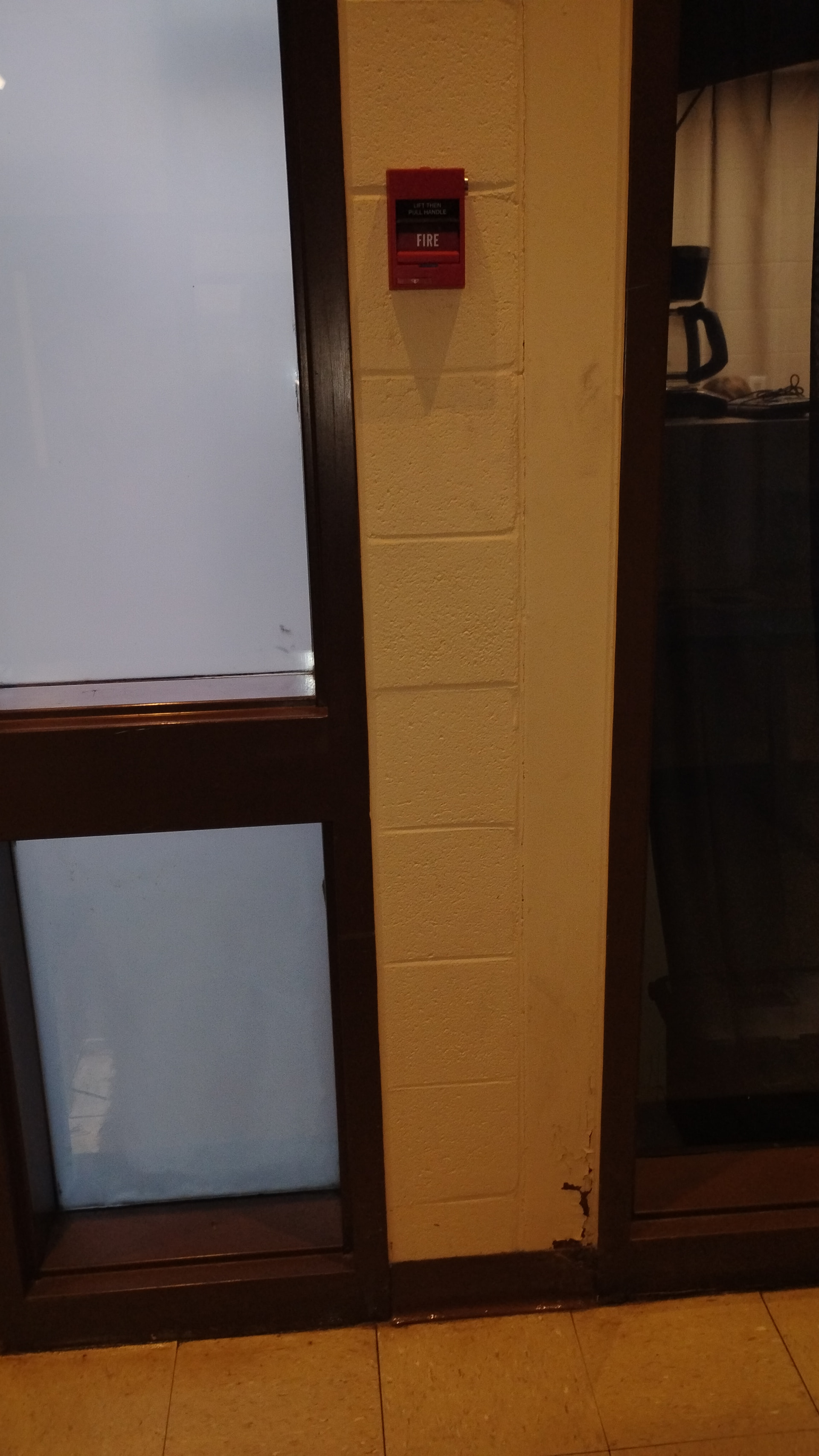
I don’t know what code says exactly, but yes, that does look to be too far up from the floor for handicapped individuals to use.
3 Likes
I recall seeing one of @FireAlarmDude5967’s videos of a certain system in a building and they appear to have moved the pull stations in that particular building further down. These were mounted on a special trim box or something iirc.
1 Like
Yeah: one that’s been made is called the “Watchdog RELOCATOR” by Light Engineered Products, Inc. (which as I just discovered is for notification appliances as well as pull stations). Another company (forget which) also had the idea to extend the handle rather than move the station itself down & so built a device that could do the former, but it really wasn’t that good if you ask me.
2 Likes
Yes, they’ll need to install a relocator device to lower it
1 Like
The AHJ may have allowed this when the system was being replaced. I know that a good example is my district’s former high school. They had several pull stations that were mounted far too high, or way too far away from doors, and all of the locations were kept when they replaced the system in 1986, and again in 2007. I know that, based on reports I’ve seen, they would have been forced to put them in the proper locations if they did another system upgrade.
1 Like
NFPA 72 section 17.17.7 requires the operable part of a pull station to be within 42 and 48 inches above the floor.
According to Home Depot, a standard cinder block is 8 inches tall, and in this photo, the pull station is located more than 7 cinderblocks above the floor (56 inches), which is outside the allowable range.
1 Like
funny enough, that particular building was built in 1986.
2 Likes
In modern day, yes, this wouldn’t be allowed per NFPA 72 however in older buildings, particularly schools and other places that were likely to have young kids, pull stations were often placed higher up as a way to avoid unknowing kids from pulling the alarm.
It’s hard to say the circumstances here, but the building we can see doesn’t look particularly new. It’s possible that if a when a newer system was put in place, the AHJ allowed them to use existing spots. Not ideal, sure, but at the end of the day, whatever the AHJ gives the thumbs up on goes. 
2 Likes
you are probably right. the rules we have today probably didn’t apply in 86.
1 Like
If the replacement is classified as a “repair,” then it generally does not need to comply with any new codes but instead only needs to not worsen any existing deficiencies (e.g. mounting new pull stations at the correct height and not relocating any existing pull stations to be even higher), at least with NFPA and IBC. I’m not sure if ADA would take effect in this situation.
3 Likes