Yeah! The AHs are very odd though: heck if there were 7002Ts there, why not just replace them with ASes instead of separate AHs & RSSes? (unless perhaps this particular system was required to be able to do audible silence & no one knew that 2-wire Wheelock horn/strobes can do so as long as you use a sync module with them, & so they put in separately-wired remote horns & remote strobes instead. I suppose however that the RSSes could have come first, when there were still 7002Ts in those spots (probably to bring the candela rating up to code), & then at a later date the AHs replaced the 7002Ts as they already had visual signaling in place in the form of the RSSes & thus didn’t need ASes)
I was saying before the RSSes, and AHes, they had 7002ts, and where the RSSes are, were where the 2ts are.
Yes, I know that, but I still find it odd that they went with separate AHs & RSSes instead of ASes.
I thought it was Firecom that was common in NYC (kidding)
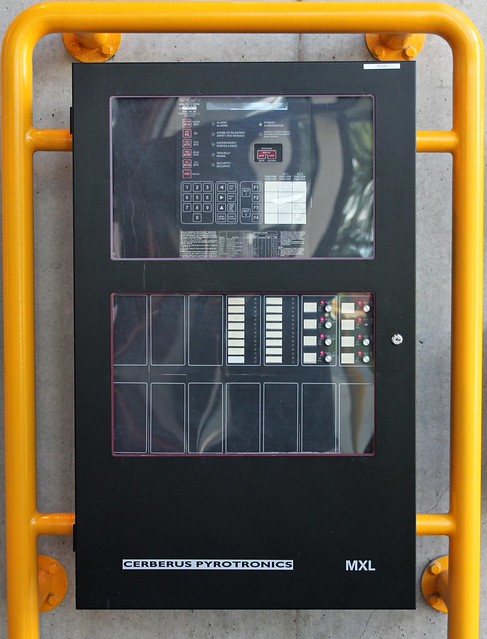
One of the buildings at my university recently got an upgrade. This building opened in 2002 and originally had a Cerberus Pyrotronics MXL with MSI-30BC pull stations (two-stage) and U-MMT horn/strobes:

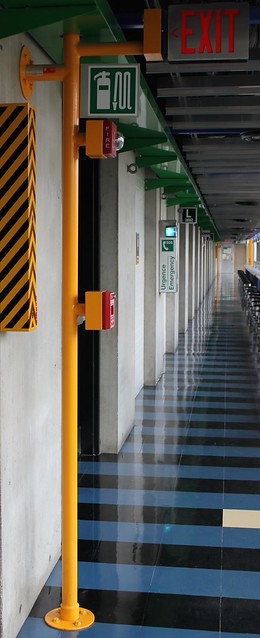
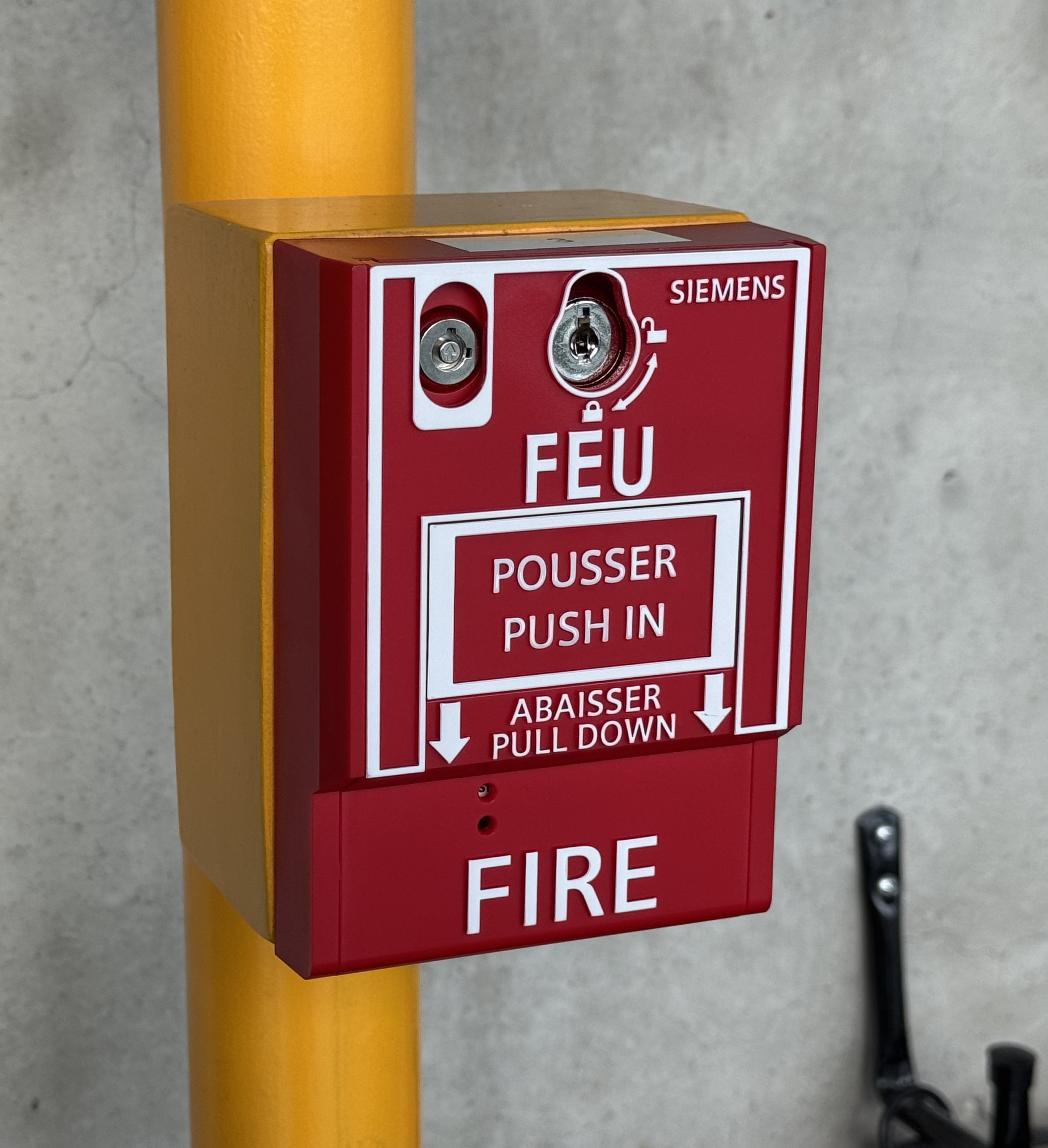
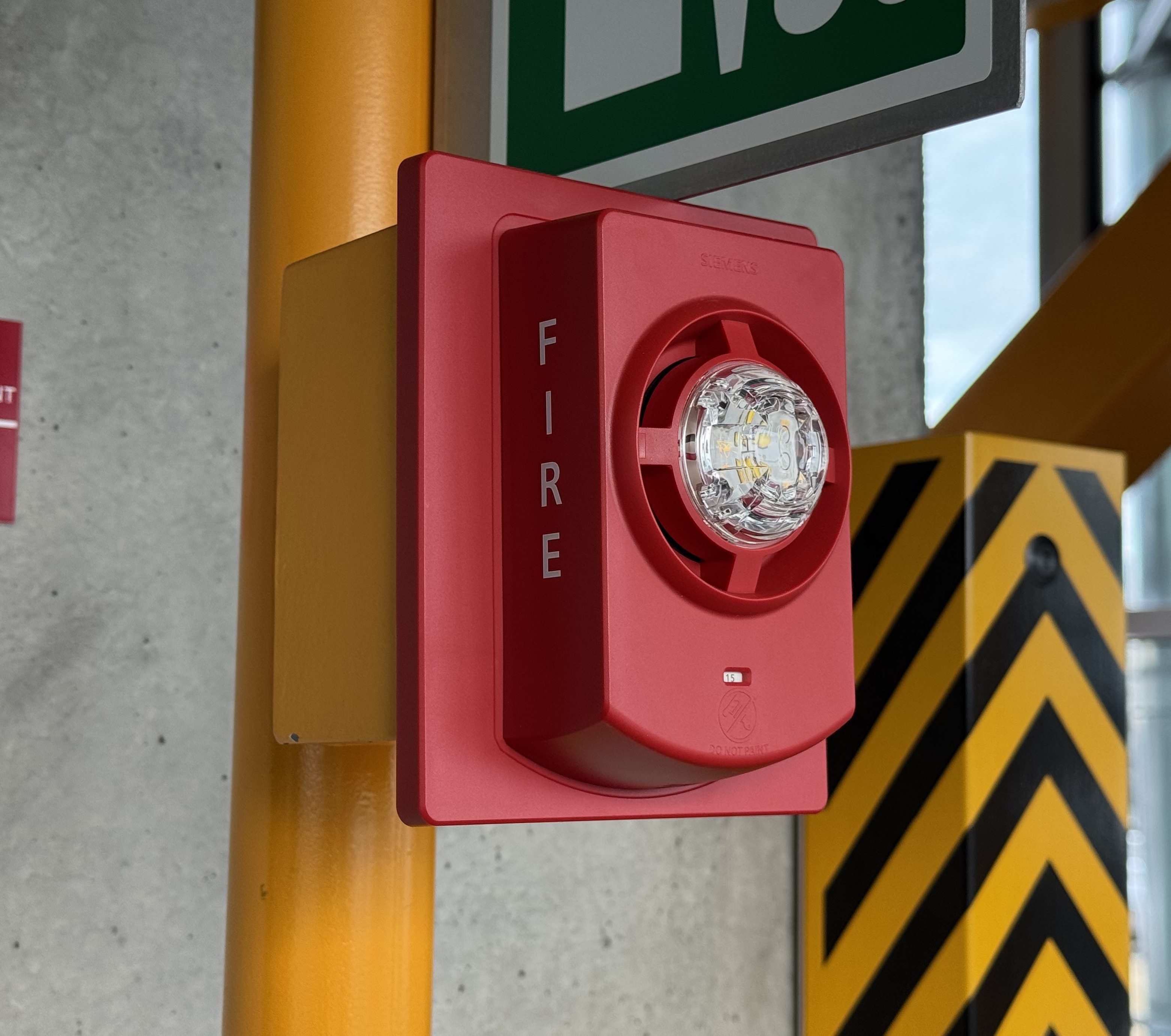
The new system is a Siemens Desigo with XMS-2S pull stations and SC-HS-WR-F horn/strobes (my first time seeing either of these devices):


5 Likes
This is super cool. That’s my first time seeing these devices too. Because I’m in the U.S., I’ve only ever seen the Speaker/Strobes and the single stage XMS- devices. I’d say the biggest benefit with the XMS- series pull stations and -921 series detectors, as well as the X-series modules, is that they allow easyfor class X SLC loops, where there is an isolator between each device. That’s because each addressable device has a built in isolator. If that feature isn’t being used, than the installer can choose to use them in a different mode, where they are not polarity sensitive. Although it’s cool to see the new horn/strobes, I feel like it wasn’t really necessary to change those. Also, I really wonder how both the old, and the new horn/strobes behave in a two stage setting.
2 Likes
Yeah, same here, Ascend Devices in canada! Although I would’ve liked the whetherproof eluxas though.
1 Like
Interestingly, I’m not convinced that this system is actually configured for two-stage operation; every other academic building on campus has a single-stage system, so it seems odd that this one would have a two-stage setup. I know of two other Siemens systems in my area—including the FireFinder at my workplace—that have two-stage pull stations but operate as single-stage systems. I have no idea what purpose the two-stage pull stations would serve in such an installation.
For two-stage operation, the horns would most likely pulse in 20BPM in first stage and switch to code-3 in second stage, while the strobes would flash continuously in both stages. I’m not particularly familiar with the Acend devices, so I’m not sure how exactly this would be achieved with the new horn/strobes.
I didn’t know that the ASCEND Series devicicals have respective trim plates.
Rather neat (especially the Cerberus Pyrotronics-branded MXL: you don’t see too many of those compared to the Siemens-branded ones (probably because the MXL was sold for a lot longer under Siemens (1998-2013) than CP (1992-1998). Any idea where it & the old devices might have gone to?).
Odd how the pulls are bilingual but the signals are not (unless Siemens for whatever reason doesn’t make bilingual trim plates for the ACEND-series).
I like the way that the panel and devices are mounted in this building. It is super unique and makes the devices stick out, but still looks relatively slick and matches the asthetic of the building (from what I can see).
I didn’t know about the trim plates, either. These horn/strobes have unusual proportions—they’re tall and skinny—, so I expect the trim plates to be popular for retrofit applications. In fact, per the instructions, it seems that a trim plate is required when a 4” backbox is used. I didn’t expect this as the devices look wider in photos than they do in person.
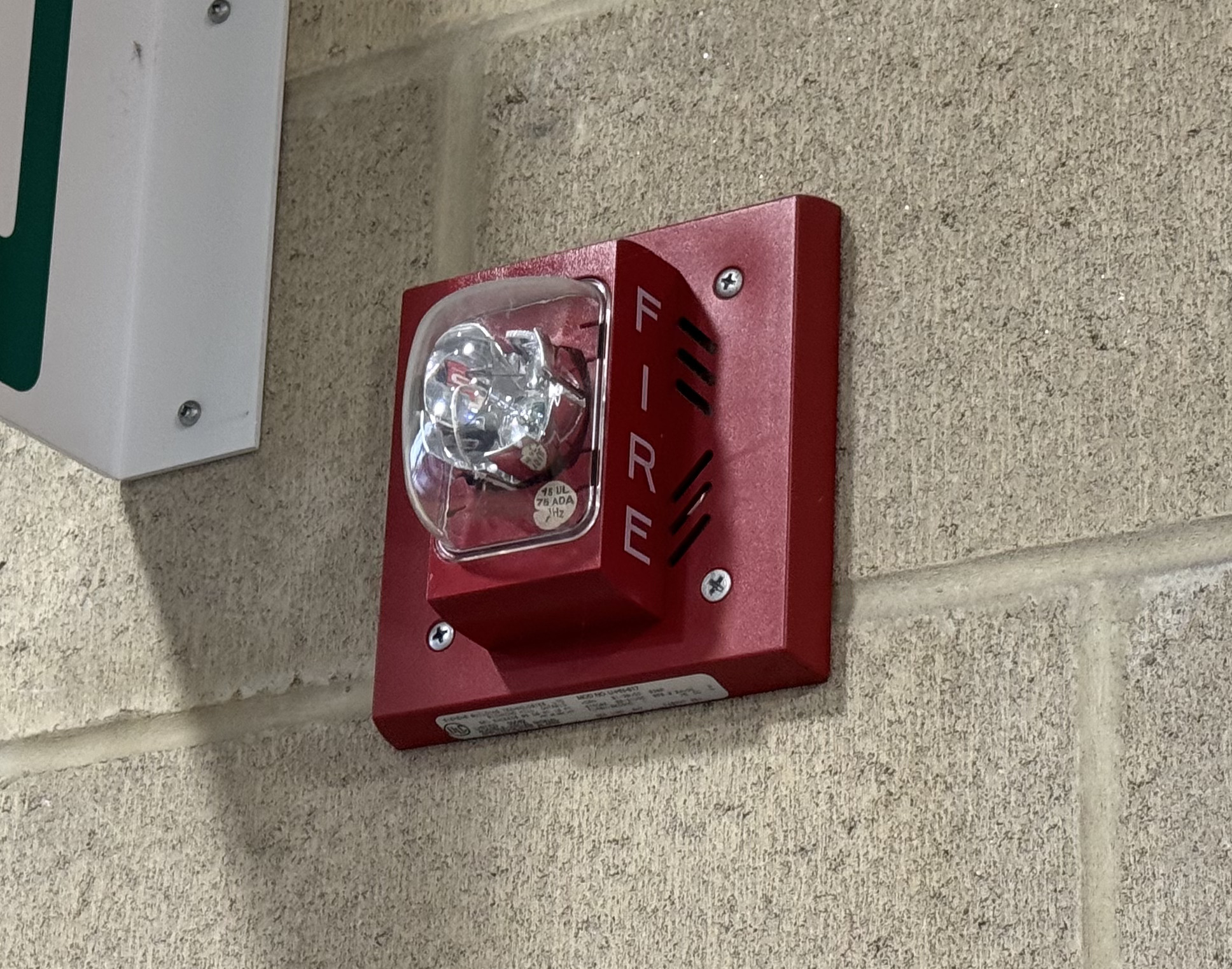
I assume that the devices were disposed of. This university only has one remaining MXL in service (I’ve included photos below); its days are likely numbered, so I don’t think that there would be much reason to keep any parts for replacement purposes.
As far as I can tell, no bilingual option is offered for these horn/strobes. Per the datasheet, the closest match is a separate cover with a “house and flame” symbol.

I agree—it’s a wonderful building with an incredibly creative design. The manner in which the devices are mounted definitely matches (and even enhances) the building’s aesthetic. Last year, I posted photos from another building that has devices installed in a similar manner, albeit with a Notifier system; both buildings were designed by the same architect, Ron Keenberg.
3 Likes
Typical techs…thought about checking any nearby dumpsters just in case?
Sure, but obviously that’s not the case with us collectors, heh.
Yeah, I noticed that: both interesting that Siemens would include such an option (basically no other manufacturers do: heck not even NAs outside North America make use of that symbol I think) & bizarre that they wouldn’t include an option for bilingual English/French lettering (no Spanish or Portuguese options either like what System Sensor offers with their L-series). I suppose however that whoever replaced the previous signals could have put blank cover plates on the new ACEND-series devices & then custom “FEU/FIRE” stickers on those (which of course would have to be custom-made but they still likely would have worked).
Hope you’re able to save that remaining MXL & those classic electromechanical horn/strobes someday! (since you might have missed a chance to save the other set)
1 Like
Building at Minnehaha Falls- Minneapolis, MN
This is a small building that is located in the area around Minnehaha Falls in Minneapolis. It contains a restaurant, an event/party space, and restrooms.
Panel: Some unknown Honeywell Vista fire/burglary combo panel
Notification Appliances: Wheelock HSR horn/strobes, and STR and STRC remote strobes
Pull Stations: Honeywell 5140MPS-1 rebranded Sigcom pull stations
Detectors: System Sensor i3 series smoke detectors, and System Sensor 5000 series mechanical heat detectors
HOLY SMOLY!! MOM GET THE CAMERA
smork alam
1 Like
US Bank Tower - Los Angeles, CA
N/A:
- Edwards EST GCHFWN-S2VMC
Pulls:
- Honeywell 460s pull (Chrome colored, also some at another building nearby, with red units in the mix)
1 Like
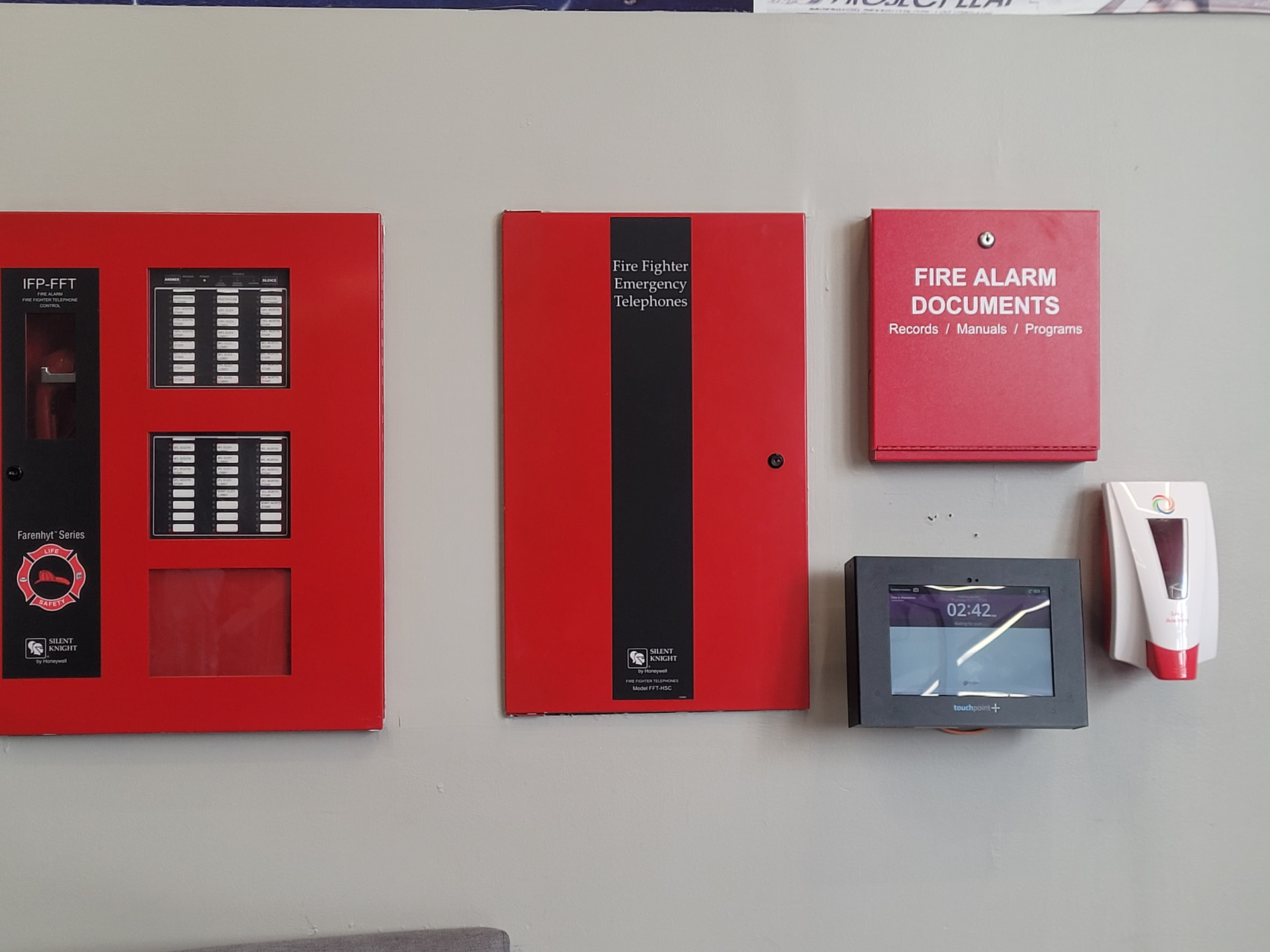
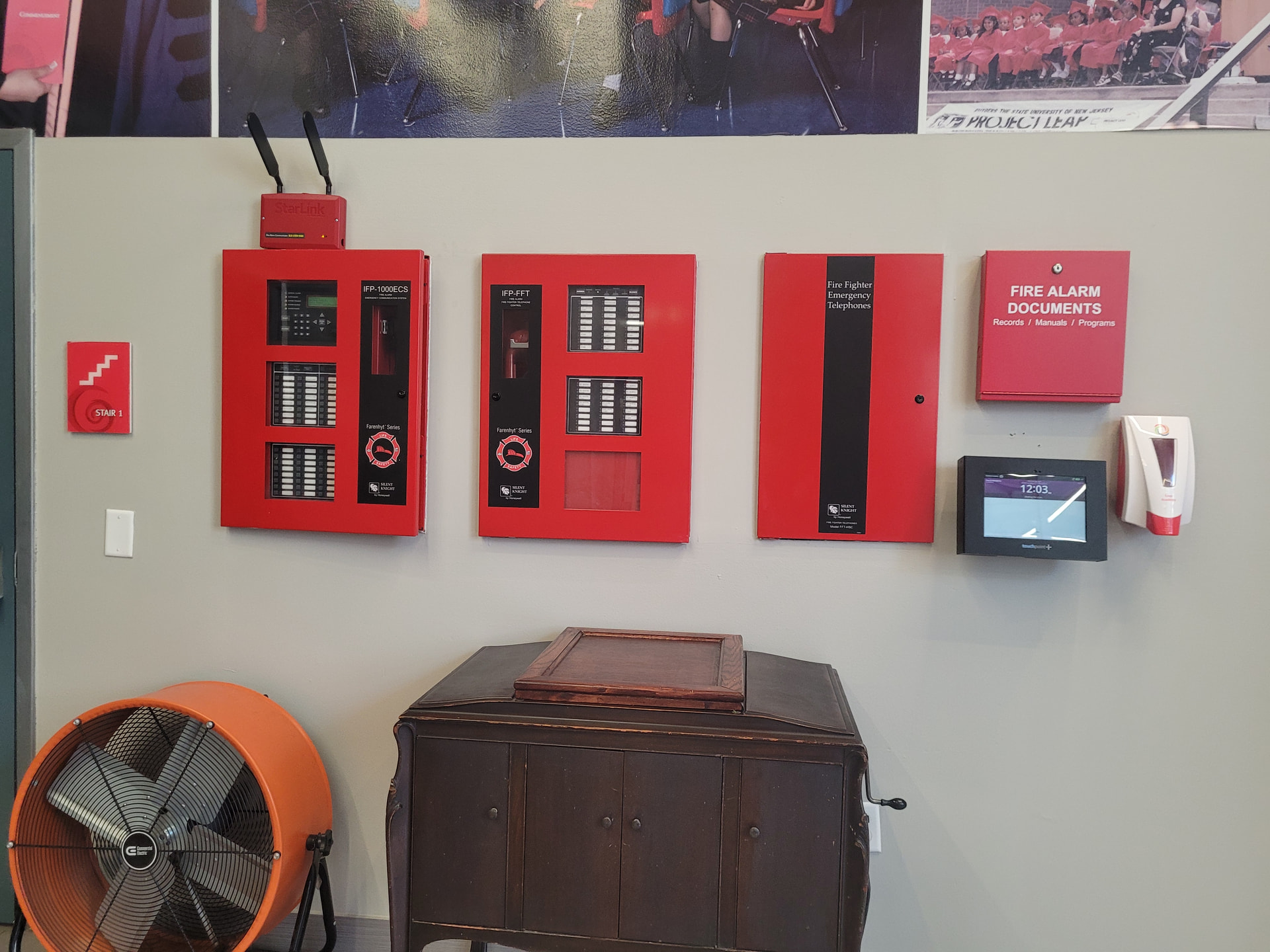
Silent Knight Voice Evac, 12 Floor High School. CAN YOU BELIVE THAT!?!?!?!!?!? it’s a renovated office building in Camden NJ
3 Likes
A very impressive system indeed! You definitely don’t see those every day!
Interesting choice of location…
That fan wouldn’t happen to be there for smoke extraction would it? (heh)
Yeah, the lunch room is in the same area as the panel. The elevators are also across from there, the fan is gone by now since there was a panel swap earlier in 2025.