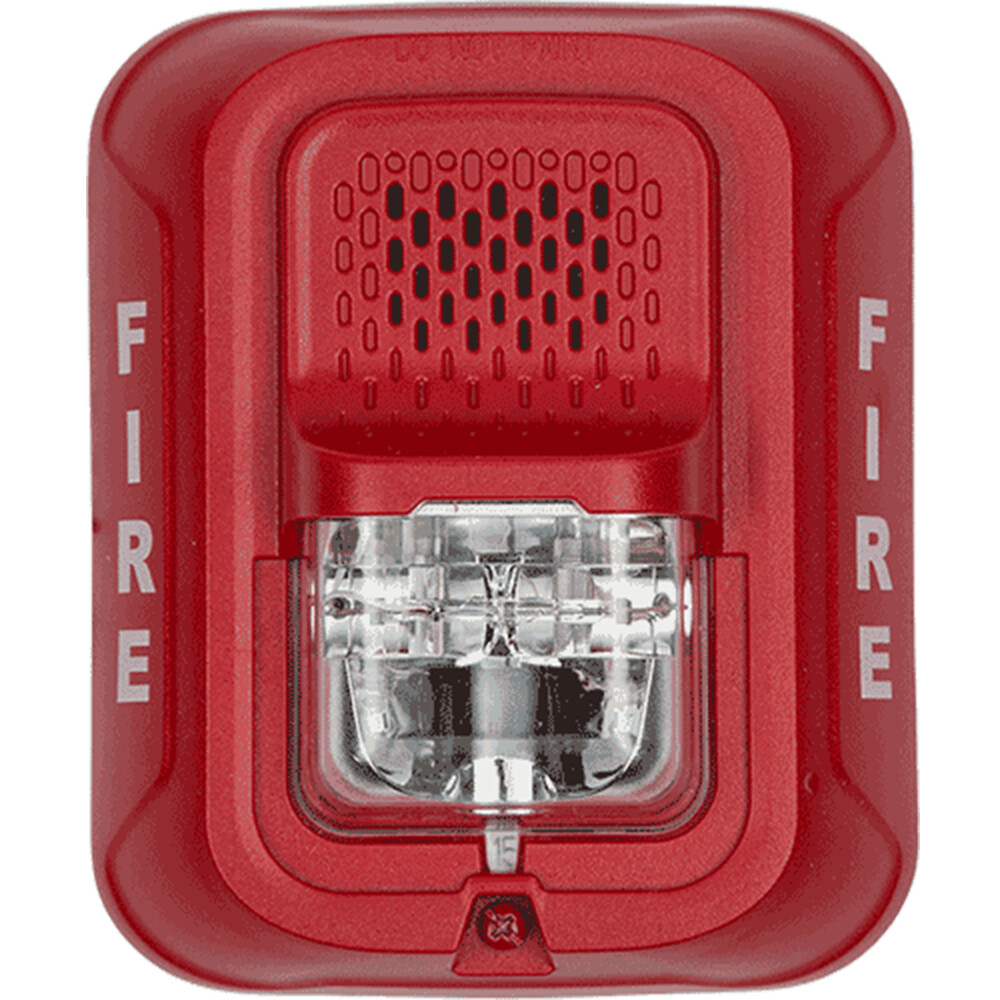
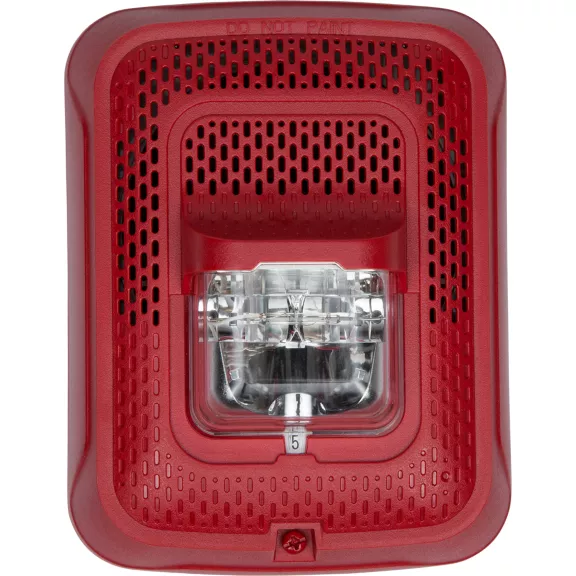
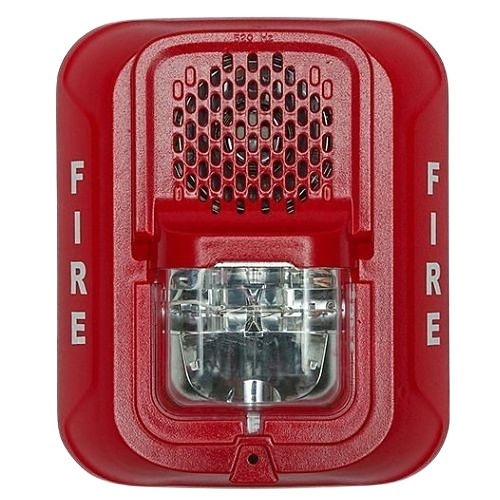
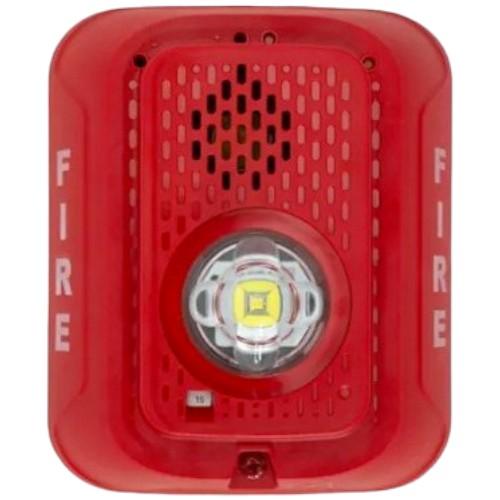
Are you talking about store pages like this? I’m 99% sure these are brand new (and I just discovered them while writing this post), since a few months ago I was searching “System Sensor P2RLED-LF” and “System Sensor P4RLED” almost daily in anticipation of the products being released, and I probably would have found that if it existed.
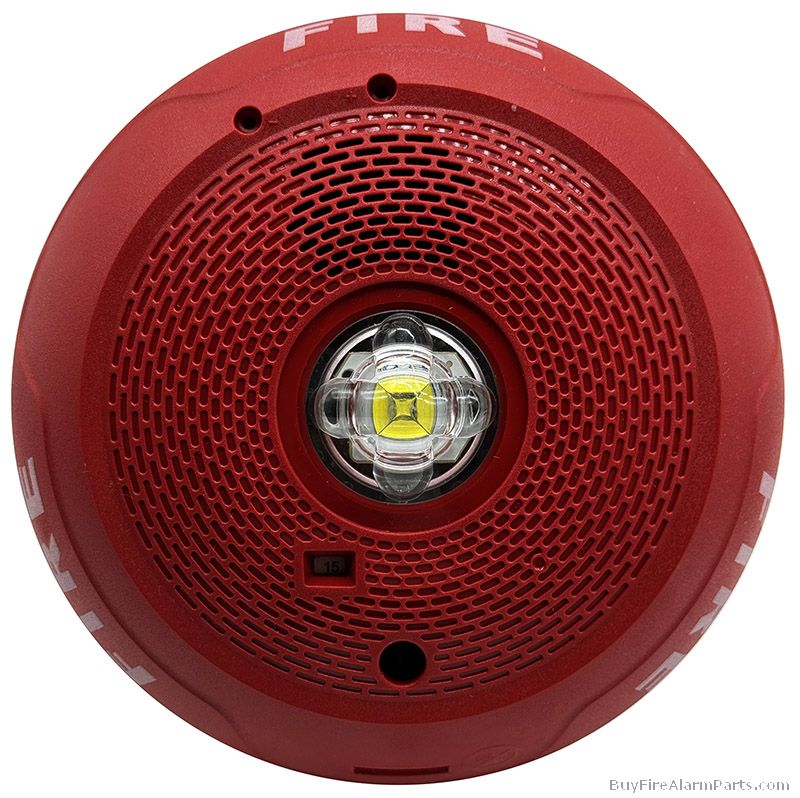
This page has a photo, and I suspect that it is just a P2RLED, but it led me to notice that the P2RLED has 2 extra dummy holes for voltage test points, which are probably reserved for actual voltage test points on the P4RLED. The SPSRLED and P2RLED-LF only have one pair of test points, which is consistent with this. On the other hand, the ceiling devices also only have one pair of test points, and the second pair on the P2RLED doesn’t have +/- labels, so the second pair may have simply been decorative for symmetry (though it doesn’t make sense why they wouldn’t just put one test point on each side instead).
There’s also the P2RHK-120, which can be used on sprinkler systems in place of a bell. The Notifier slides mentioned a P2GRKLED-120 to replace this, but there has been no information about it, and there is also no information about the adapter that was supposed to be used to retrofit L-Series compact devices on older Advance backboxes.
Now that System Sensor’s sprinkler division is owned by Potter, System Sensor might not have a reason to produce this outdoor horn strobe anymore (as customers are more likely to buy the SH-120 from Potter), but it is strange that the slides would include it, considering that the slides were presented years after Safe Signal was sold.
This announcement from 2024 mentioned that 4-wire devices, among other things (not including low frequency sounders), were on their way, but 4-wire devices are now the only product that has not been released.
To be fair, the P2RHK-120 was simply a package deal with a P2RHK and a MP120K mounting plate (and possibly a backbox). There’s nothing that stops you from putting together your own P2GRKLED-120s using a P2GRKLED and a MP120KL save for the lack of documented/listed FWR support on the LED L-series (which may be why there isn’t a P2GRKLED-120 kit yet).
It’s also the wrong size, since the P2GRKLED is compact but the MP120KL is standard size, and the outdoor devices use pigtail wires instead of the L-Series mounting plate.
I think you forget that both Simplex/Autocall, and Eaton/Wheelock still offer 4-wire options (although JCI’s models may be a bit outdated). Also, Gentex is currently still selling the Commander3 devices, although that may change. It is annoying that these other companies don’t offer the devices for retrofit applications. Although separate devices can be used, it’s much less elegant, and adds cost and complexity.
I found a Reddit thread about an L-Series magnet test feature. I don’t know where this came from or how old it is (since it is showing xenon devices but also unreleased GFP panels), but this might be another hidden feature.
I know some people have taken apart L-Series devices (both original, and LED). Do they even have the hardware in place for this? Until that is confirmed, I’m staying skeptical of this Reddit thread.
I don’t think it’s a coincidence that all of these devices have devices have a dot in that specific location. I’m curious if the hardware existed.
It looks like this was in the original presentation as well.
There are some numbers engraved on the back of the dot, and there is some kind of screw in that position on the circuitboard. That screw might be a bobber or something.
I actually wonder if the L-Series already has some kind of addressability feature resembling the Edwards SLC protocol that is based on wire resistance, but they are waiting for some patent to expire before releasing the FACP side. That would explain why the FCP candela and T3/T4 switching features have not been released.
This does all seem quite odd. That very small black component that is to the right of the “screw” in the photo of the P2RLED board photo looks like a hall-effect sensor to me.
Addressability would also explain why Honeywell seems eager to release the Ultra series and GFP series, despite the former being very similar to the standard 6000 series. One comment in that Reddit thread mentions that the Notifier INSPIRE already has a switch related to the magnet tests, so it might be ready for addressable notification with a software update, and the GFP would then also have those features.
Also, if the L-Series has actually had a dormant addressability feature the whole time, System Sensor will likely have a competitive advantage over Simplex and Siemens because one of the advantages of addressability is the ability to T-tap the circuit when making retrofits, which System Sensor customers can take advantage of without needing to replace the existing L-Series devices, while Simplex customers need to replace all conventional TrueAlerts with TrueAlert ES devices.
Another interesting note is that slide 10 of the Notifier slides mention transitioning the outdoor Advances to the “L-Series Platform.” This is a very odd choice of words, as there is not much currently distinguishing the L-Series from the Advances besides the appearance, bezels (which are not compatible with outdoor devices), and lenses (which were completely revised for the LED series and are not widely used for fire alarm notification). If the L-Series devices have some other addressability-related function in them, then this choice of words would make more sense.
It looks like there are an awful lot of empty spots for components (including one for a chip) on the P2RLED board. Is it possible that a future addressable version is coming (similar to the Siemens ACEND series), but they haven’t released it yet, and that version will fill those spots on the board? That seems more likely to me. You would think that they would need some way of setting the address if it was an addressable device, wouldn’t you? I feel like the tone and candela selection dials could be repurposed on an addressable model. Has anyone looked at their construction? Maybe they have more positions than they are currently using.
If my understanding is correct, the Edwards devices receive their addresses from the FACP, which distinguishes between the devices based on the total resistance of the wire between the FACP and the device, meaning the address is determined by the order of devices on the circuit.
Did not notice that but that would make sense. On the other hand, I’m not sure why they would use a separate chip for addressability instead of having a single chip handle both addressability and horn control.
I just realized that the screw is probably the back side of the tone selection dial, but the component next to it would explain the magnetic testing functionality.
EST Mapping works by using the resistance between each of the devices and determining where they are on the loop. It’s mostly used for device for device replacement, or as the main form of addressing on their smaller iO panels. The EST3/4 usually have the devices addressed in the programming so they can be labeled before installation.