Recently, I was able to get ahold of some very unique and very obscure old Honeywell panels. I’m not sure how well-known these panels are amongst the community here, but I know information on them is pretty difficult to find, and there doesn’t seem to be too many of these left in service anymore. Either way, I am very happy to have these and give these panels a second lease on life.
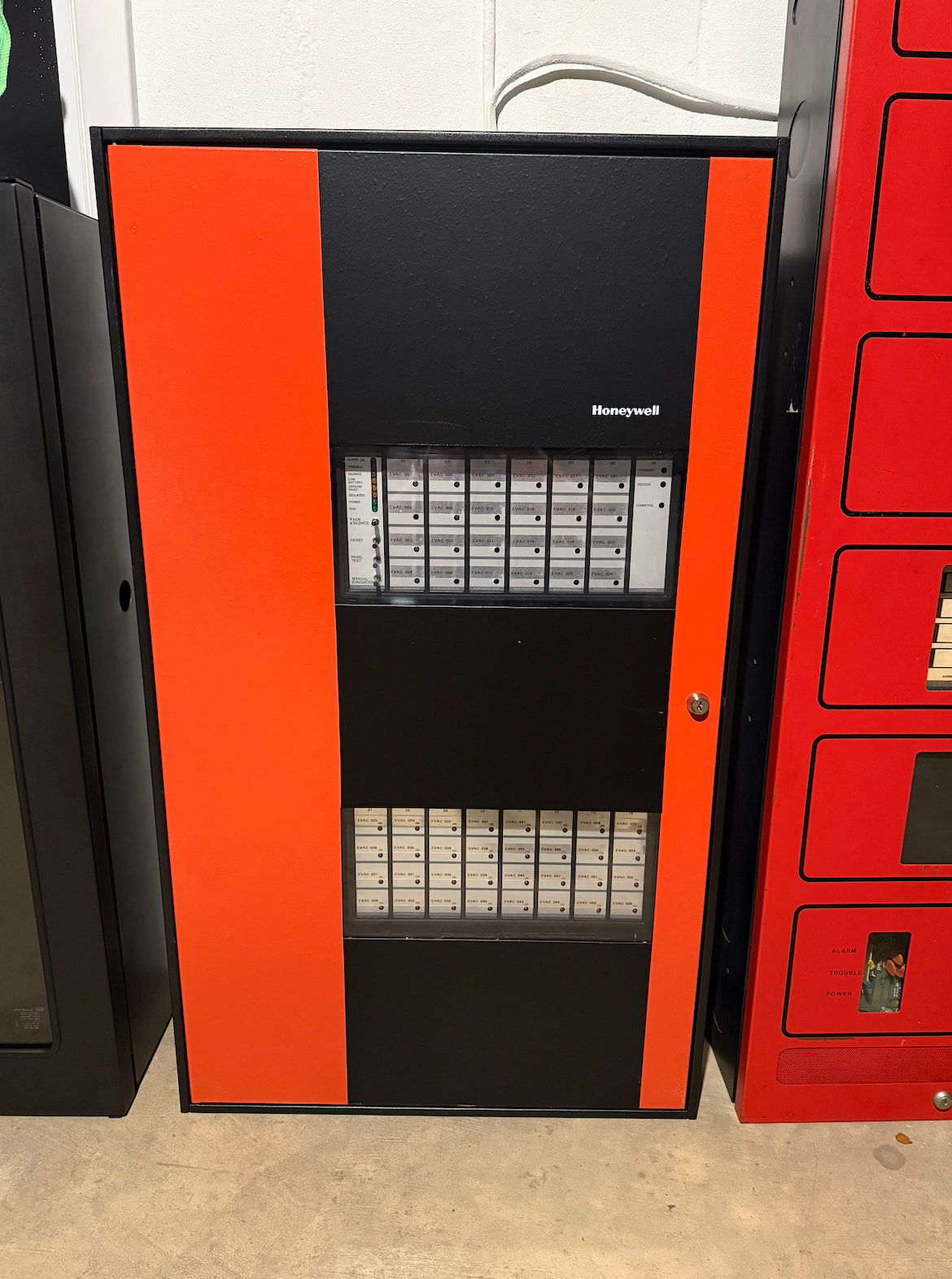
First up is a Honeywell FS90. This panel was released by Honeywell in 1986 as part of the “DeltaNet” line - a full building automation system offered by Honeywell at the time - as a complete fire and security system. These panels were extremely flexible and highly customizable, and could range from small conventional systems to very large and complex networked systems with addressable loops and support for voice evacuation. These panels were in production from their introduction in 1986 to roughly the early 2000s when they were superseded by the XLS-1000. This particular FS90 was manufactured in 1994 and consists of two bays of cards. Oddly enough, this panel did not have any zone or bell cards in it when it was installed originally. According to the stickers on the card cage covers, this panel had a main control card, a communications card, and a whole bunch of relay cards. I’m not sure how or what this was being used for originally, but I do know this panel was a part of a much, much larger Honeywell system. I did obtain two addressable loop cards, a display board for the addressable loops, and two zone cards - I’ll be adding these into the panel soon.
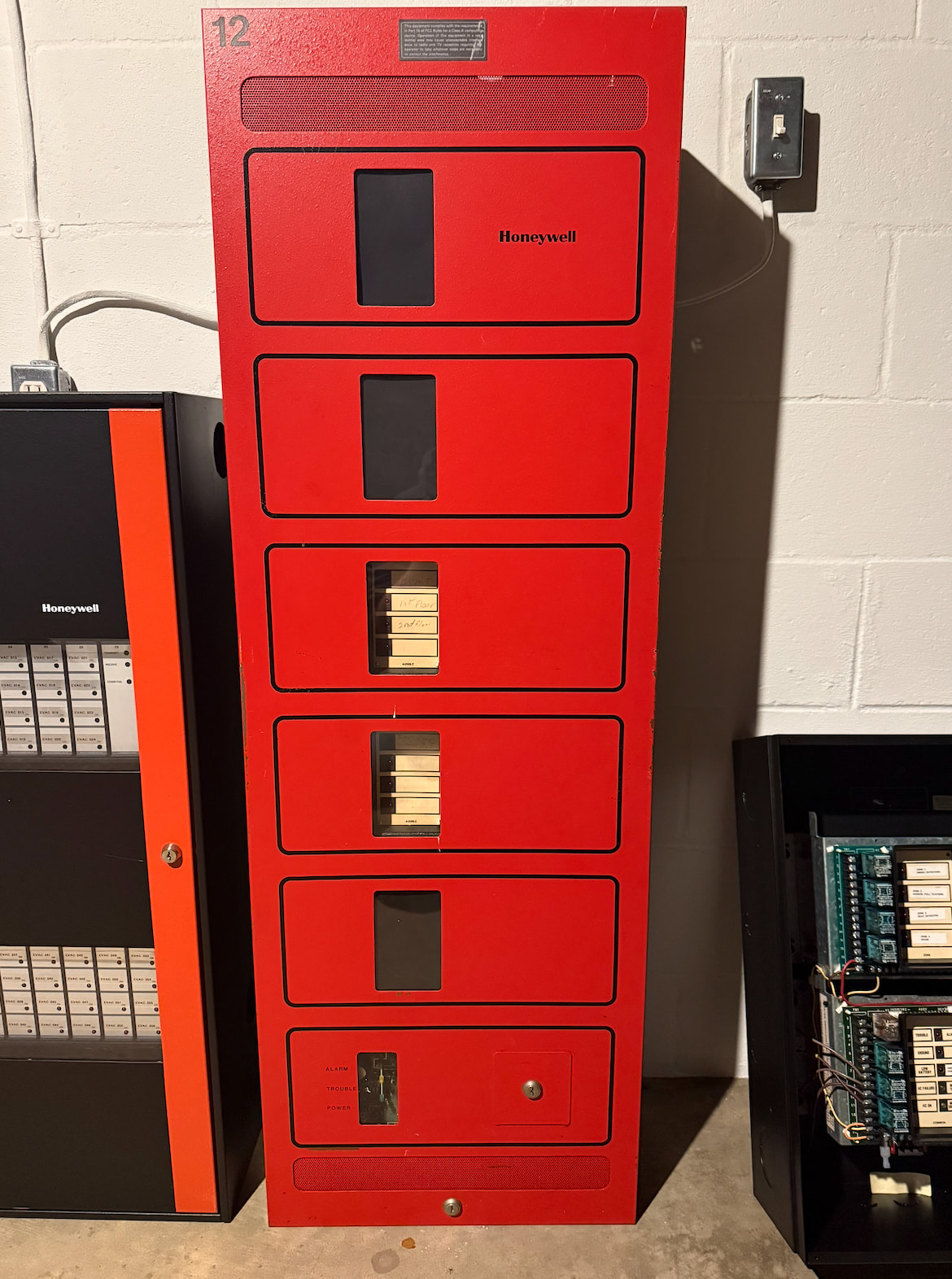
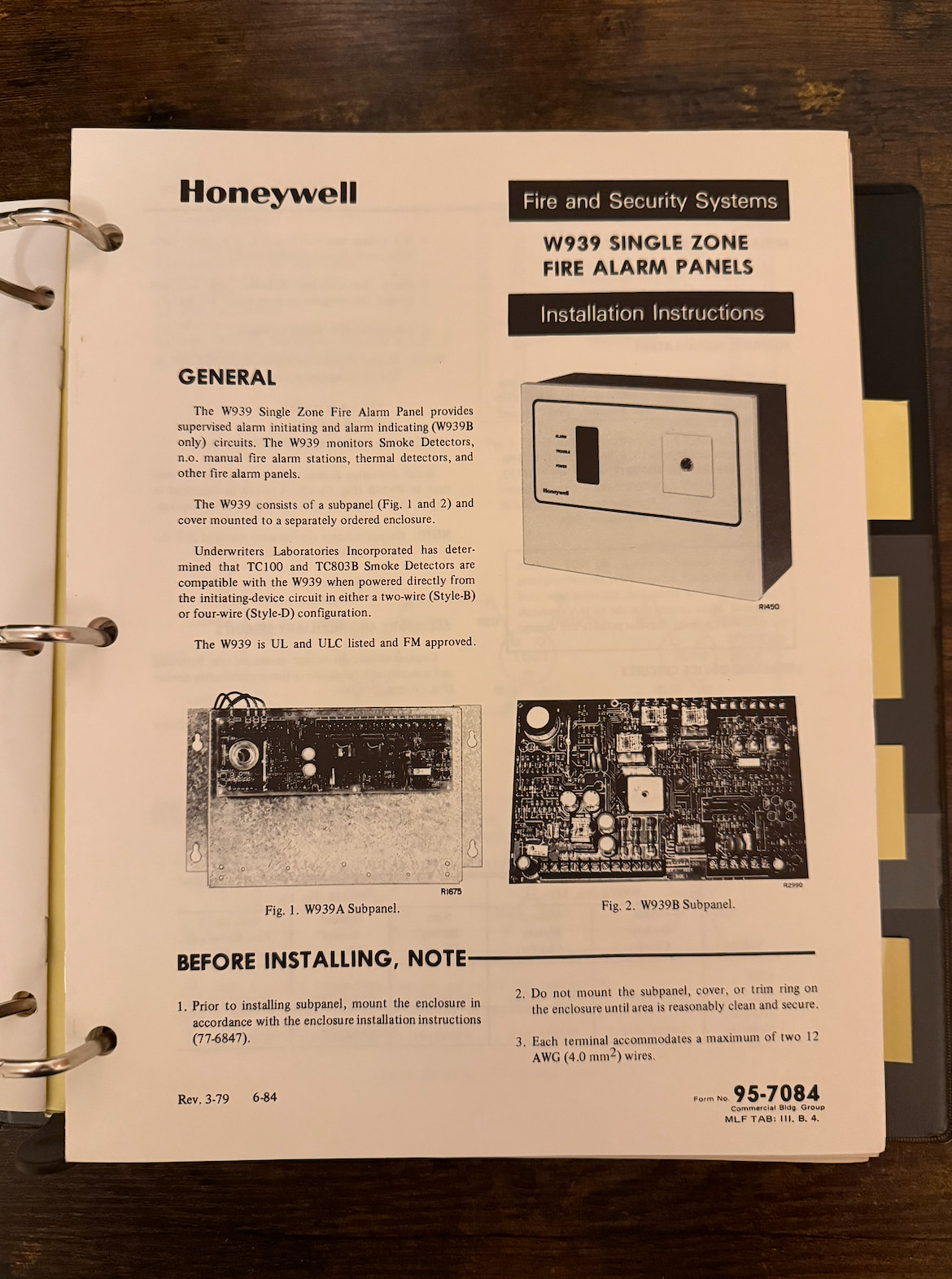
Next is a Honeywell W939. This panel was released by Honeywell somewhere between 1977 - 1979. This panel was mainly intended to be a very simple, single-zone conventional system that came in two models - the W939A, and the W939B. The W939A had only one zone, an alarm relay, and no signal circuits. Honeywell offered this version as more than less a smoke detector power supply, or really just a panel for monitoring smoke zones and reporting back to a master control panel. The W939B, which is what I have here, also only has one zone, but has two signal circuits as well. This panel was mainly offered in a small cabinet that just contained the main board, with no options for expansion modules other than a marchtime coder that could be mounted on the rear of the main control board chassis. However, the cabinet I have here is not that. This cabinet has room for up to five expansion modules. The main control board is in the bottom row, and there are two audible expansion modules in the 3rd and 4th rows for additional bell circuits. Oddly enough, I obtained a whole bunch of literature for this panel, ranging from sales sheets, installation manuals, wiring diagrams, etc. Absolutely none of those mention anything about the style of cabinet I have, nor do they mention this panel being capable of using expansion modules. So I’m assuming what I have here is extremely uncommon. I have some additional modules I can add to this panel, including another audible expander module, and a zone expander module (if this panel is compatible with it).
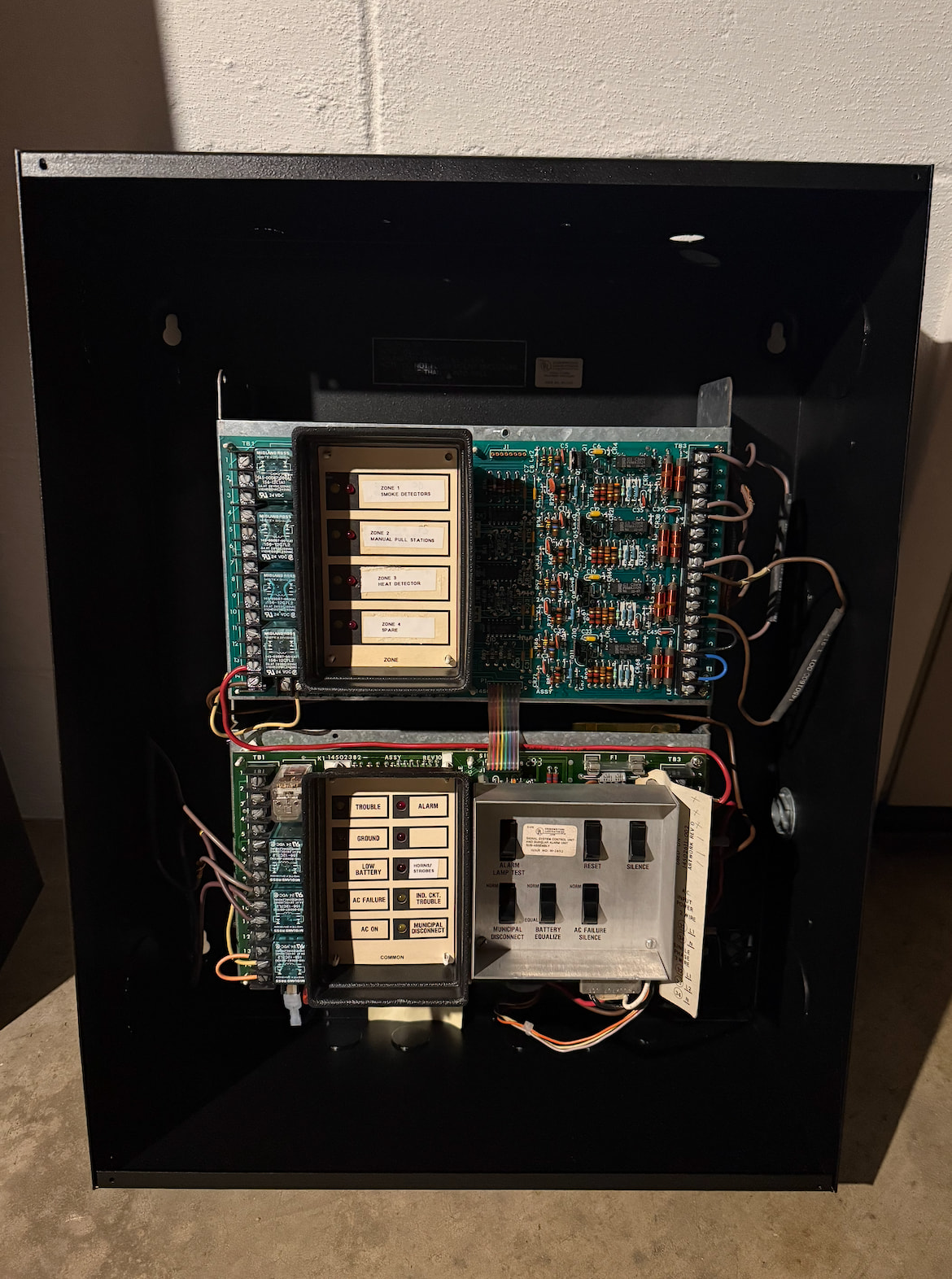
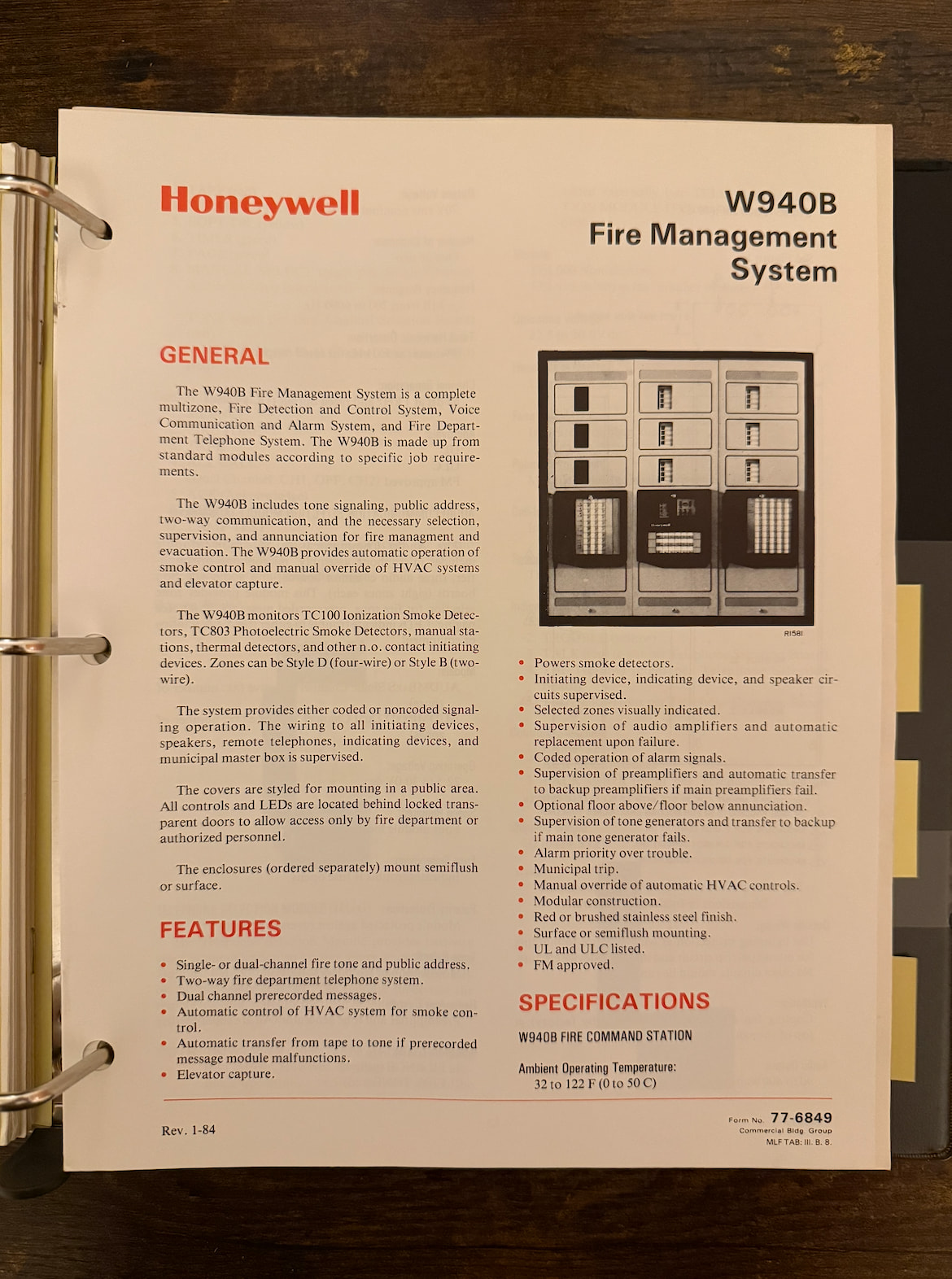
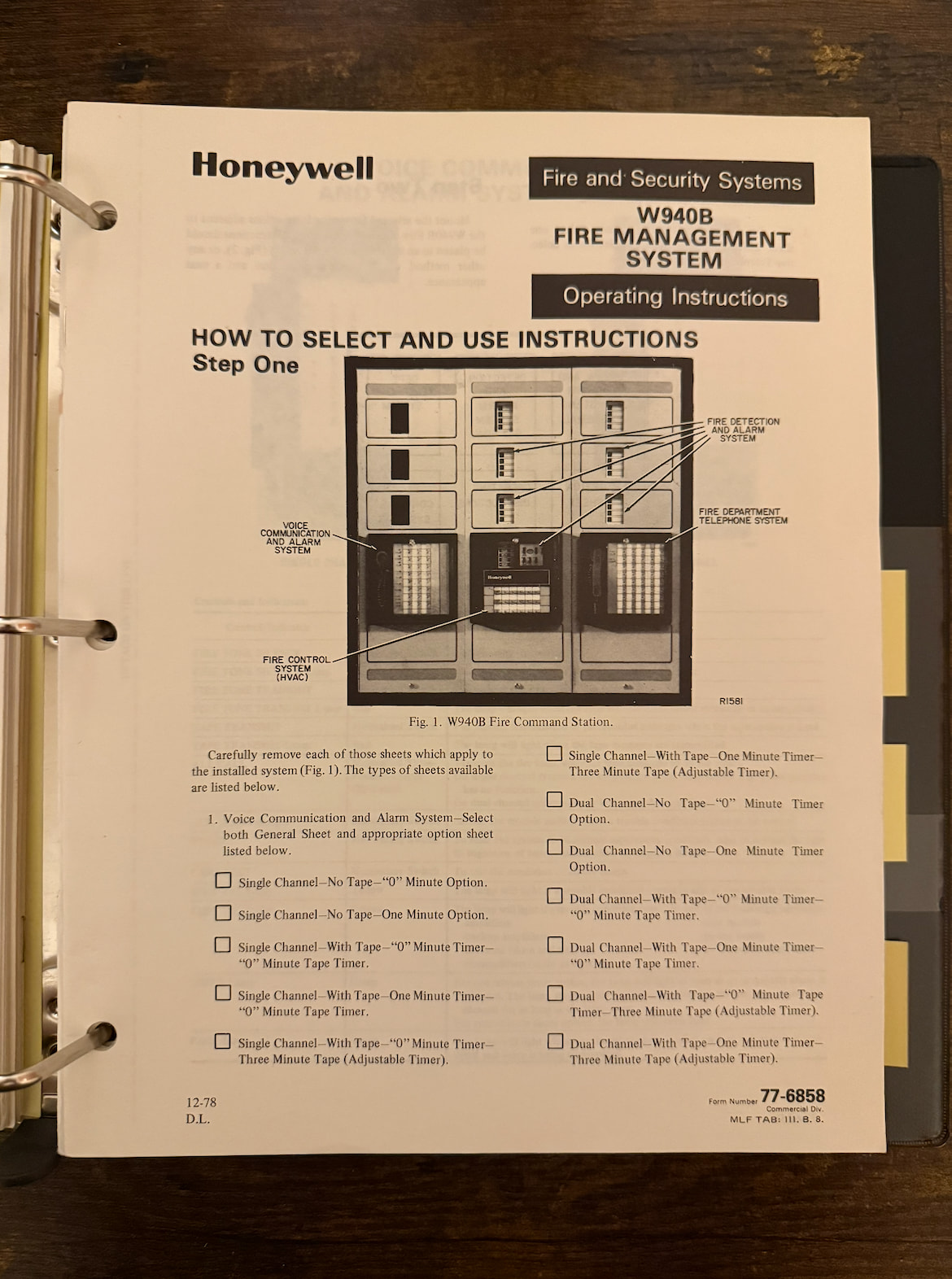
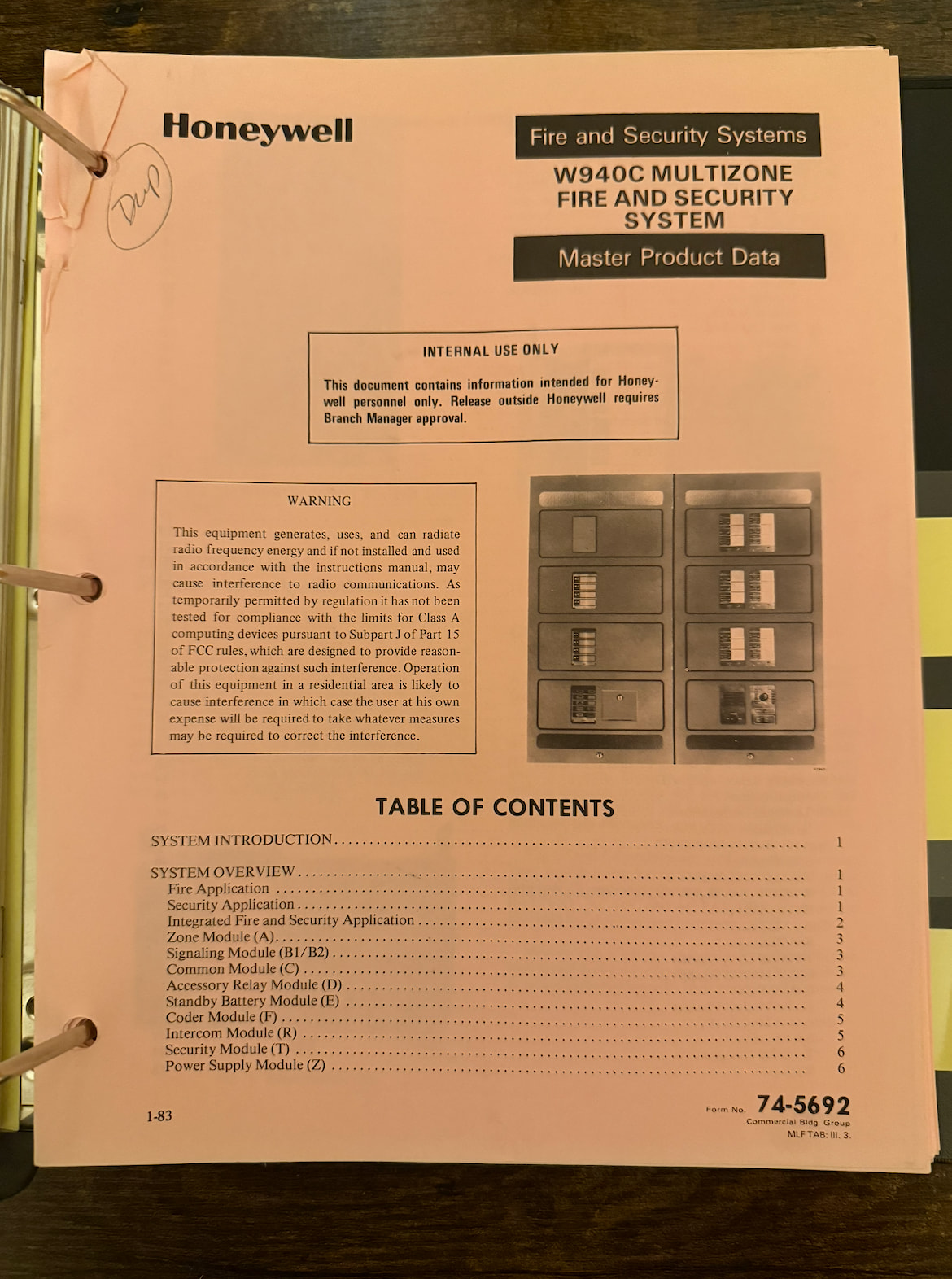
Lastly is a Honeywell W940. Also released by Honeywell between 1977 - 1979, this panel served as Honeywell’s flagship offering from its introduction until it was replaced by the FS90 in 1986. Much like the FS90, these panels could be very large and complex, with support for voice evacuation and integration with Honeywell’s Delta 1000 building automation system. These panels were also completely modular (similar to other panels of the time), making them extremely flexible. This particular W940 was never installed or in service - this panel was used as a demonstrator unit its entire life. It has one zone expander module, and was manufactured in 1984 according to some of the dates on the internal components. Unfortunately, this panel did not come with a door - however, I may be able to obtain one in the not-too-distant future. Out of all three panels, this is the only one I’ve cleaned up completely so far. I’ve even repainted the back can - something I plan on doing with the other panels as well.
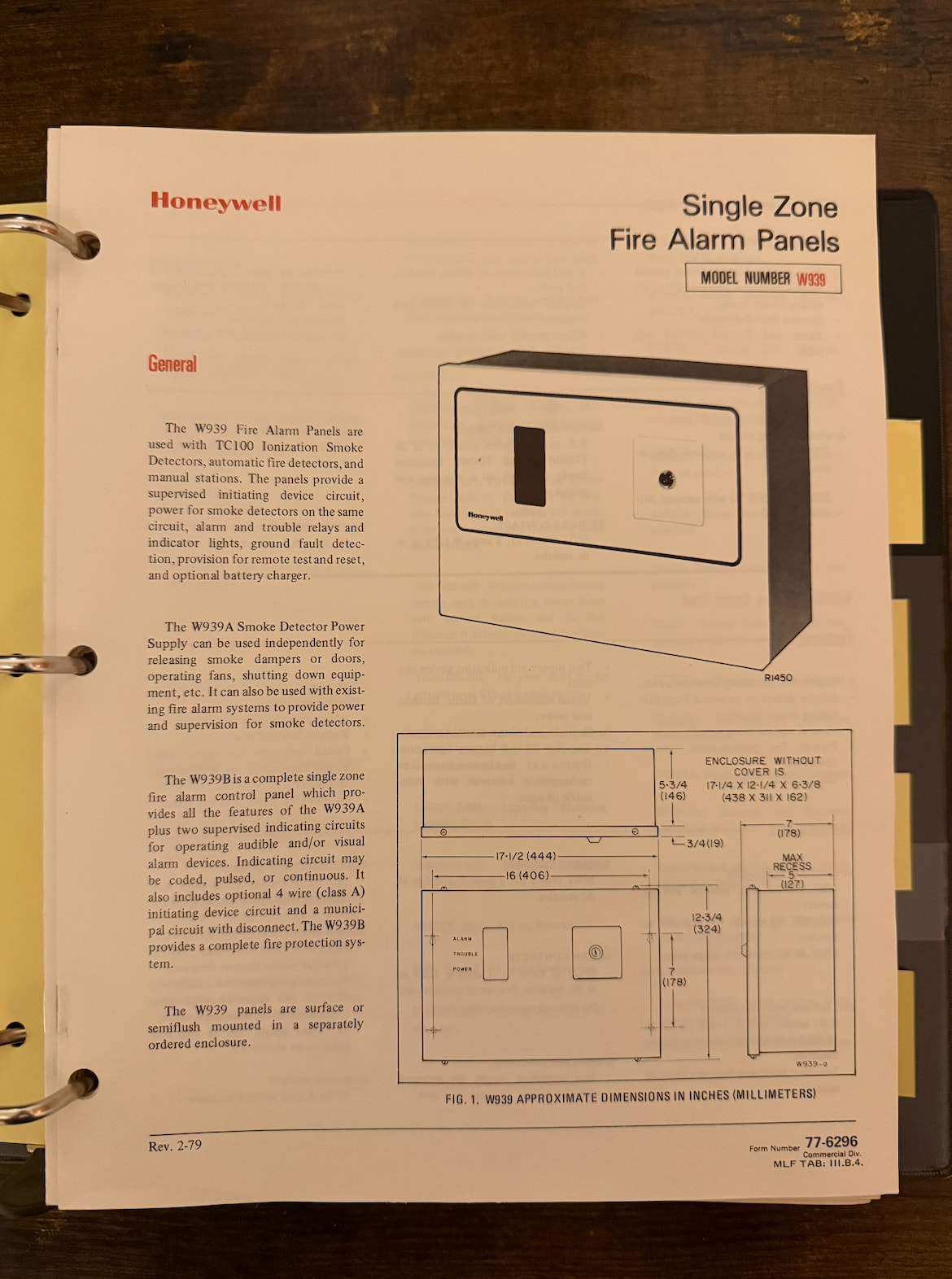
In additional to these panels, I also got a massive 2” binder full of documentation related to the W939 and W940. I’ll share some pictures of that below.
I want to give a special thanks to @pilot for helping me obtain all of this - it would have not been possible without his immense help.